
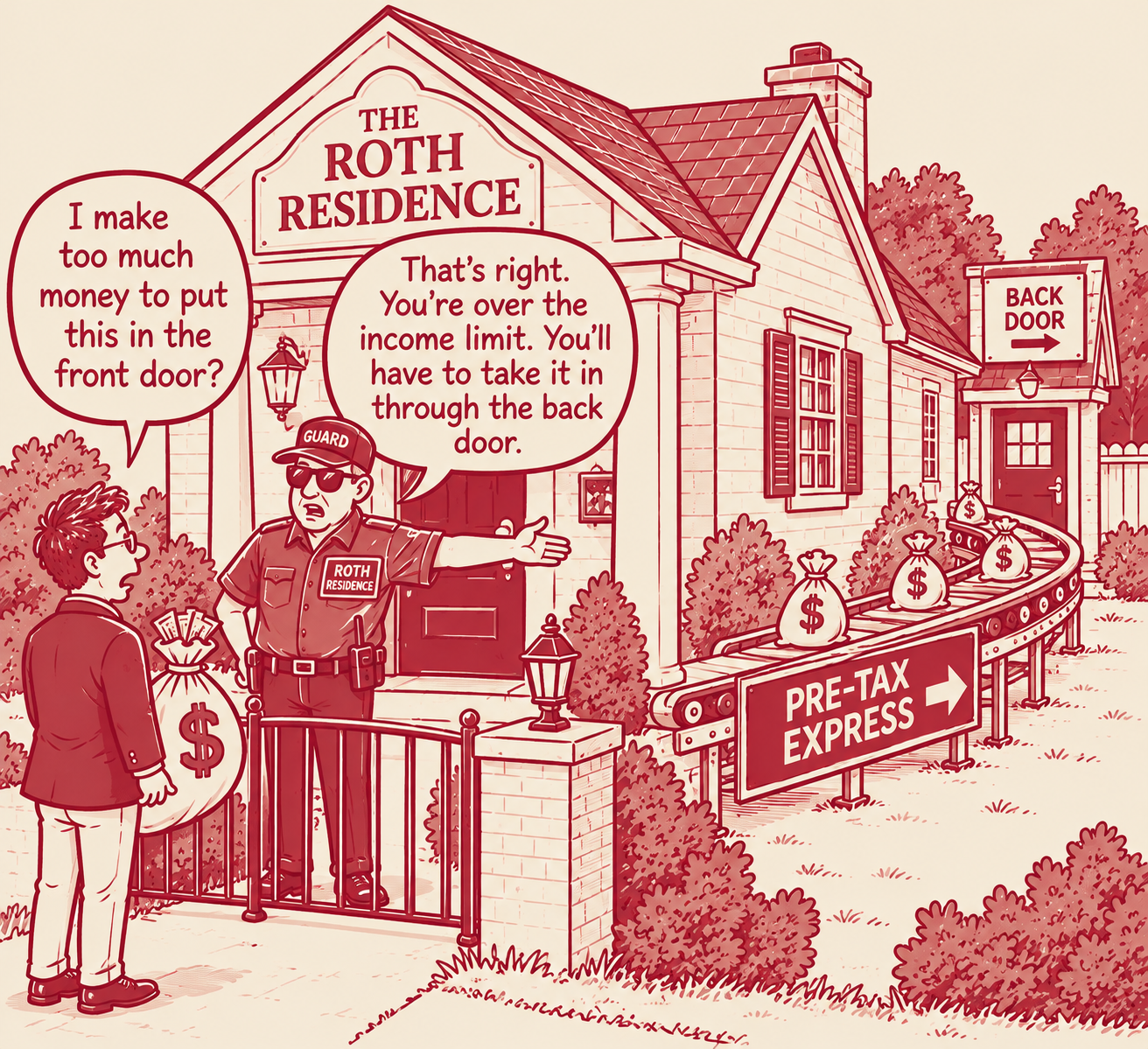
When Glen and I decided to join this Roth vs Traditional IRA discussion, I felt it was a natural lead into a discussion around a well-known strategy known as the “Backdoor” Roth. This strategy applies to higher level earners who are looking to make contributions to a Roth IRA, but have limitations preventing them from contributing to one. On paper, it seems simple enough, as I walk you through the “what”, “how” & the “why”. This information should allow you to bring a baseline of knowledge to a conversation with your trusted financial professional to see if this is a strategy you could and should begin implementing. Please note, this is NOT tax advice.
WHAT IS A BACKDOOR ROTH?
Simply put, a backdoor Roth involves making a nondeductible contribution to a traditional IRA and then converting those funds to a Roth IRA.
Nondeductible: Unlike deductible traditional IRA contributions, these contributions do not reduce your taxable income today. Instead, they establish after-tax basis that must be tracked for tax purposes.
Conversion: Moving funds from a traditional IRA into a Roth IRA. Depending on your circumstances, some or all of the conversion may be taxable.
WHEN DOES IT MAKE SENSE?
Direct Roth IRA contributions are subject to income limits. A backdoor Roth may offer another way for higher-income earners to fund a Roth IRA. However, more complicated isn't always better. If you're eligible to contribute directly to a Roth IRA, that may be the simpler option. Your income, savings goals, and overall financial picture should help determine whether a backdoor Roth is worth exploring.
AI Generated Image
HOW DOES IT WORK?
First, Talk to a qualified tax professional. Before moving any money, review your existing IRA balances, contribution eligibility, and potential tax consequences. You'll also need to understand the pro rata rule and how to report nondeductible contributions and conversions on IRS Form 8606.
Second, establish the accounts if needed. You'll generally need a traditional IRA and a Roth IRA. Using the same brokerage for both may make the process more convenient.
Third, make a nondeductible traditional IRA contribution. Confirm the applicable contribution limits and eligibility requirements, and ensure the contribution is recorded correctly. You generally won't receive a tax deduction for this contribution.
Fourth, convert the funds to your Roth IRA. Follow your custodian's procedures and confirm how the transaction will be reported. Any earnings before conversion and your other IRA balances may affect the taxable amount.
Finally, make sure the contribution and conversion are properly reported on your tax return, including Form 8606 when required. Keeping accurate records of your after-tax basis is essential.
THE BOTTOM LINE
That was a lot of words to describe a strategy that can sometimes involve just a contribution and a conversion. But the paperwork and tax implications are exactly why it's worth understanding the details before getting started.
A backdoor Roth can be a useful retirement-planning tool, but it isn't a one-size-fits-all solution. Your existing accounts, tax situation, and long-term financial goals all matter.
As Glen discussed in his article, the bigger picture is about understanding your options and making informed decisions. Whether you're comparing Roth and traditional accounts or exploring a backdoor Roth, asking questions before moving money can help you avoid expensive surprises later.
At BWAG, we believe good financial decisions start with good questions. If this strategy has caught your attention, consider discussing your circumstances with a qualified tax professional and a registered financial adviser before taking action.